

How Istanbul ended up making the world's puzzle games
In 2010 Türkiye had almost no games industry. By 2020 an American publisher had spent over two billion dollars buying three studios in one city. The short version of how that happened.
 Published
4 min read
Published
4 min read
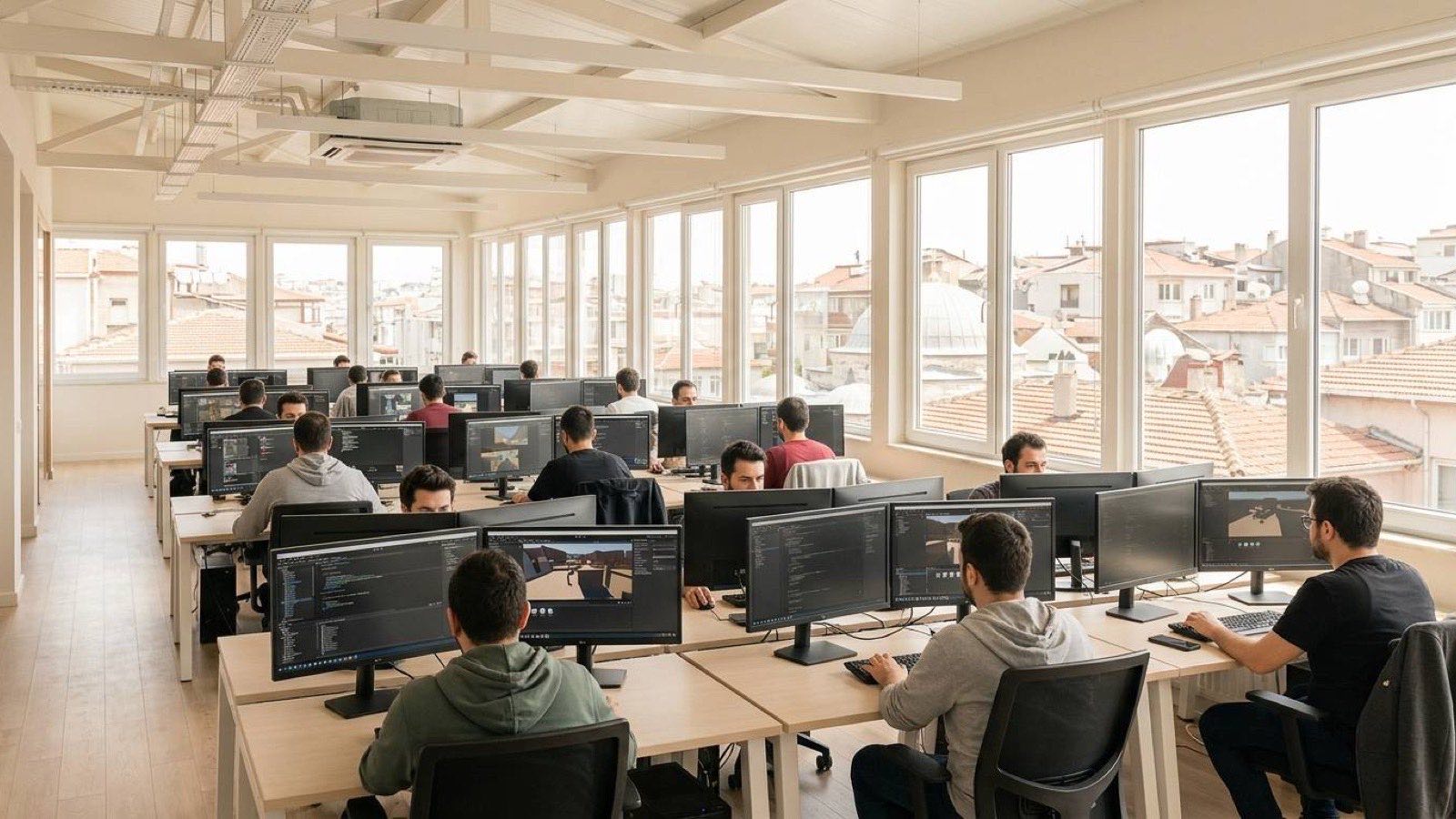 Türkiye's games industry
In 2010 there was no Turkish games industry to speak of. A handful of small studios, mostly making browser and social games for the domestic market, in a country that was not on anyone's list of places to look for games companies.
Ten years later, an American publisher spent over two billion dollars buying three studios in Istanbul, one of them for $1.8 billion.
Nobody planned this. How it happened is less romantic and more useful than the version that usually gets told.
It started with the domestic market
The first generation of Turkish studios made games for Turkish people. Card games like Okey and Batak, browser games, social games on Facebook. Peak Games, founded in 2010, was one of these.
This looks like a dead end and was in fact excellent training. Türkiye has a large young population that plays a lot, and a domestic market where nobody has much money to spend per user. If you want to build a business in those conditions you have to be very good at two things: keeping people playing, and acquiring them cheaply. Those are the same two skills that decide whether a global mobile game works.
So a generation of developers spent five years getting good at retention and cheap user acquisition, in a market that punished them for getting either wrong.
Then they pointed it outwards
The pivot happened around 2015. Smartphones were everywhere, the app stores were global by default, and it turned out that a studio in Istanbul could ship to Los Angeles as easily as to Ankara.
Peak launched Toy Blast in 2015 and Toon Blast in 2017. Gram Games made 1010! and Merge Dragons!. By 2018 Zynga was buying Gram for a total consideration of $299 million. By 2020 it was buying Peak for $1.8 billion and Rollic, a studio not yet two years old, for about $180 million.
The pattern underneath
Look at those companies together and a shape appears that is quite different from how games companies work elsewhere.
Very small teams. Peak had about 100 people when it sold for $1.8 billion, running two games with over 12 million daily players between them.
Very few products. Not a portfolio of twenty titles. Two, or in the case of Dream Games later on, one.
Obsessive about the numbers. The Istanbul studios treated user acquisition as the core discipline of the business rather than a marketing function. Test everything, kill fast, scale the winner, and never pay more for a player than they are worth.
Each generation seeding the next. This is the part that made it compound. Dream Games was founded in 2019 by five people who had worked at Peak. Rollic was founded by people from that same scene. Money and know-how from the first exits went into the next round of studios, and the people doing the founding had already watched it work once. The full map of where those people went is worth reading on its own.
The state showed up afterwards
We work on Türkiye's export incentive programme, so we have an obvious interest in claiming the government built this industry. It did not.
Presidential Decision No. 5447, the first programme aimed properly at the IT and games sector, came into force on 20 April 2020. By that date Gram Games had been sold two years earlier, and Zynga announced the Peak acquisition six weeks later. The country's reputation in games was made by companies that paid for their own servers and their own advertising, with no support at all.
What the state did do was notice, and then build something serious once it was clear what was happening. Decision No. 5447 in 2020, then a much broader framework in Decision No. 10962 from February 2026, which pays back 50% of what a company spends growing abroad and 70% when it targets one of 20 priority countries. Advertising, store commissions, hosting, events, overseas offices, sales salaries.
Put differently: the exact costs that Peak carried alone for a decade are now covered at up to 70%.
What this means if you are choosing where to build
The useful conclusion is not that Türkiye has a magic formula. It is that there is a deep pool of people here who have done this before, at companies that sold for real money, and that the cost structure of running a games company from Istanbul is now materially better than it was for the companies that made the place famous.
If you want the specifics on that second part, what the programme covers is the practical version, and the calculator turns it into a number for your own studio.
Frequently asked
Is this only about mobile games?
Mobile is where the money and the exits have been, and puzzle games in particular. There is a smaller PC and console scene, and a separate and quite large B2B software export industry that gets less attention because nobody writes news stories about enterprise software deals.
How big is the industry now?
Depends what you count. Gaming in Turkey's 2025 report put the domestic market, meaning what people inside Türkiye spend on games, at about $1.01 billion. That is a different number from what Turkish studios earn abroad, which is larger and harder to measure because most of it lands in the accounts of foreign-owned parents.
Did the government cause this?
No, and we should be straightforward about that. The first serious sector programme came into force in April 2020, by which time Gram Games had been sold and Peak was six weeks from being sold. The industry was built first and the support arrived afterwards.
Is it still happening?
New studios are still being founded and Dream Games was valued at around $5 billion in 2025. The hyper-casual boom that produced a lot of the mid-sized exits has cooled considerably.
Sources
https://cyberscope.solutions/blog/how-turkiye-became-a-games-exporter/ · Updated July 14, 2026 · CyberScope Solutions